
 您所在Position:
China Southern Power Grid Development Strategy:
To build a world-class power grid enterprise, we must correspondingly enhance capabilities in five key areas. First, elevate sustainable development capacity by fully leveraging the grid platform to advance demand-side energy transformation. Second, strengthen operational capabilities. Third, boost innovation capacity. Fourth, enhance internationalization capabilities. Fifth, improve brand management capabilities.
The specific development objectives for China Southern Power Grid are:
By 2020, ensure the achievement of the “185611” targets: average customer power outage duration in the company's central urban areas below 1 hour, with 10 major cities including Guangzhou and Shenzhen also maintaining average outages below 1 hour; third-party customer satisfaction rating no less than 80 points; non-fossil energy share in electricity generation no less than 50%; return on net assets (ROE) not less than 6%; cumulative valid patent holdings not less than 10,000; and overseas asset ratio not less than 10%.
Distribution network construction and electrical equipment upgrades are also critical components of grid development under the 13th Five-Year Plan.
Current distribution networks generally exhibit weak structures, low levels of electrical equipment automation, and suboptimal power supply reliability. Enhancing the technical standards of distribution network electrical equipment and upgrading switchgear are urgent and vital tasks.
The task of accelerating distribution network upgrades must advance on two fronts simultaneously: both modernization and replacement must proceed concurrently.
Switchgear technological upgrades encompass two components: primary switchgear and secondary control circuits.
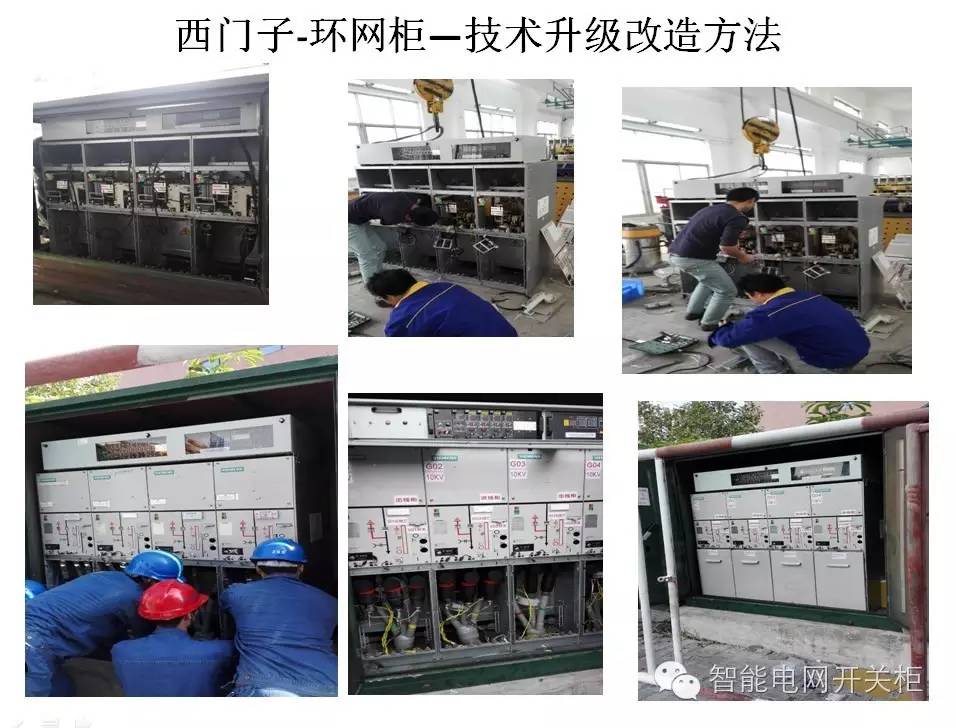
1. Integration of primary and secondary distribution systems aims to elevate the standard of distribution network construction and renovation.
Recently, China Southern Power Grid has accelerated the development pace of distribution networks in central cities. Long-standing bottlenecks caused by low equipment informatization levels have severely constrained the upgrading of urban power systems and the application of new technologies, making technological advancement in distribution networks imperative. By 2020, China's distribution network automation coverage must reach 90%, making distribution automation upgrades a future investment priority with vast market potential.
2. Simplifying distribution equipment types to elevate standardization and intelligence levels
With the advent of the equipment automation era, traditional manual operations are undergoing significant upgrades and transformations toward automated intelligent manufacturing. The demand for control mechanisms addressing both speed and error prevention has become exceptionally urgent under traditional economic models. As industrial equipment and IT infrastructure enter a period of rapid development, they undergo transformations in product architecture, manufacturing models, and industrial ecosystems. Integrated electrical switchgear systems form the cornerstone for achieving intelligent automation in modern industrial distribution networks.
Advancing distribution network intelligence hinges on implementing “IoT+”—the interconnection of objects, services, and people—which represents the future trajectory of electrical equipment manufacturing. “IoT+” involves developing and refining process control systems, communication solutions, sensors, and software. Leveraging the internet as an open platform for data exchange paves the way for diverse applications, enhancing flexibility and productivity across industrial and power sectors. The ‘things’ in “IoT+” refer to electrical equipment equipped with sensors, software, and computational capabilities.
3. The integration of primary and secondary systems in distribution equipment primarily involves conducting integrated design for complete sets of primary and secondary equipment.
Equipment manufacturers and integrators conduct in-depth development of distribution equipment, incorporating numerous integrated devices across diverse categories. They provide comprehensive solutions. As equipment suppliers, manufacturers offer extensive technical guidance to design institutes and end-users during the early stages to gain recognition for their products. This ensures seamless collaboration during the installation, commissioning, and acceptance phases of integrated products.
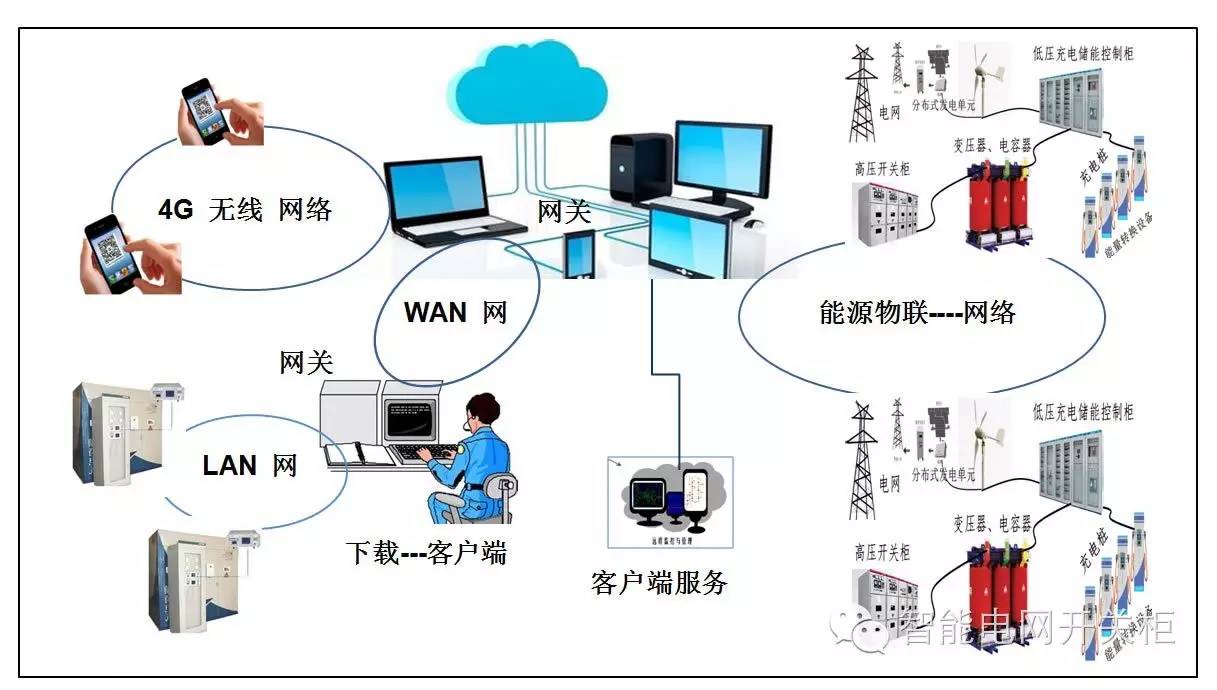
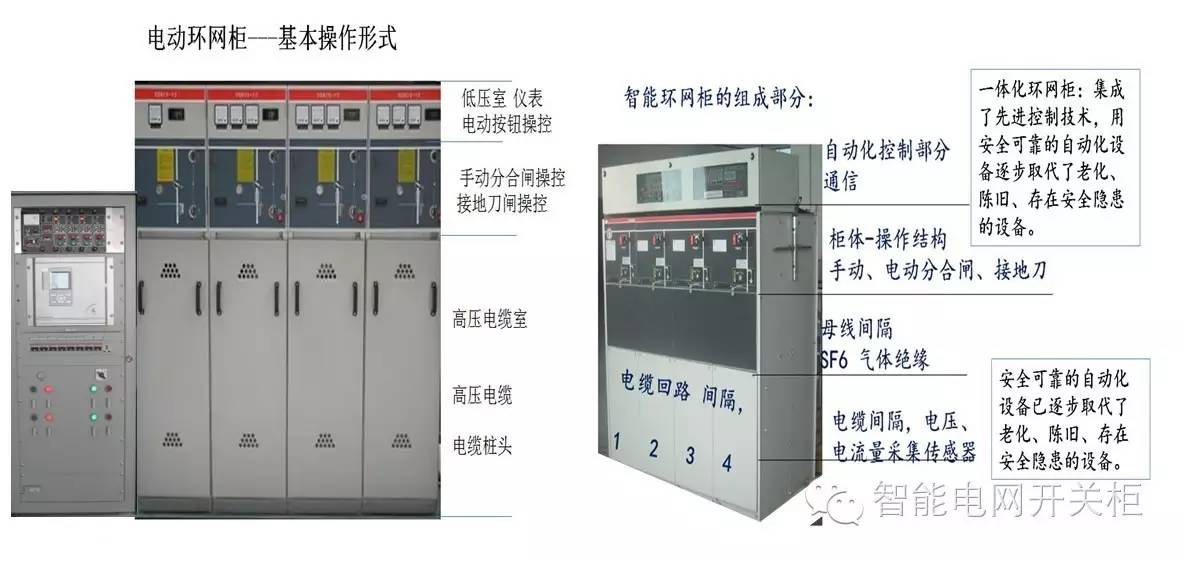
4. Objectives of Distribution Automation
The primary goal is to address fault handling issues. The introduction of primary-secondary integration technology for electrical switchgear also prioritizes solving fault detection and fault handling problems.
(1) For Class A+ and A power supply areas, construction should primarily adopt the “fiber optic + three-remote” model with a centralized master station automation approach.
(2) Class B, C, D, and E power supply areas require distribution automation development, focusing on local feeder automation for fault handling. Fault detection and localization should utilize fault indicators, with construction models primarily relying on two-remote methods and public wireless networks.
(3) Distribution automation deployment strategy: Promote intelligent distributed feeder automation in areas with advanced network structures and high reliability requirements.
(4) Advocate centralized feeder automation for cable-dominated networks in most regions.
(5) Encourage local feeder automation for overhead line networks.
(6) For rural lines, the primary challenge remains resolving fault location and identification.
5. Integrated Solutions
By enhancing the standardization and integration of primary and secondary distribution equipment, we elevate operational performance, maintenance quality, and efficiency. This better serves the distribution network construction and transformation action plan.
Key technical solutions for integrated primary/secondary distribution equipment include:
(1) Pole-mounted switch primary/secondary integration solution
(2) Ring main unit primary/secondary integration solution
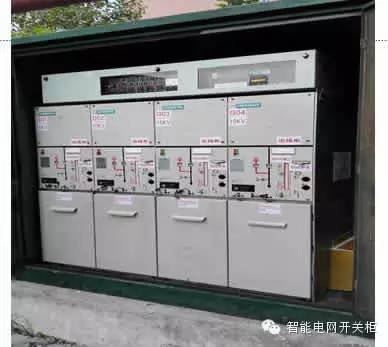
6. Integrated Equipment Case Studies
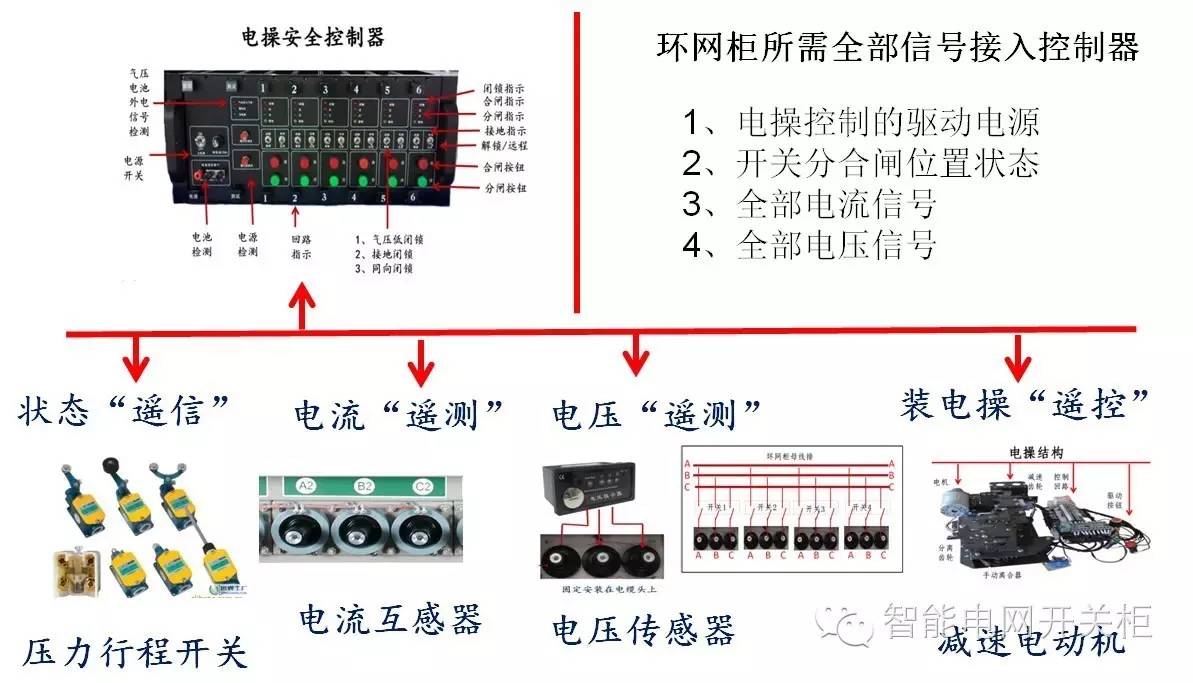
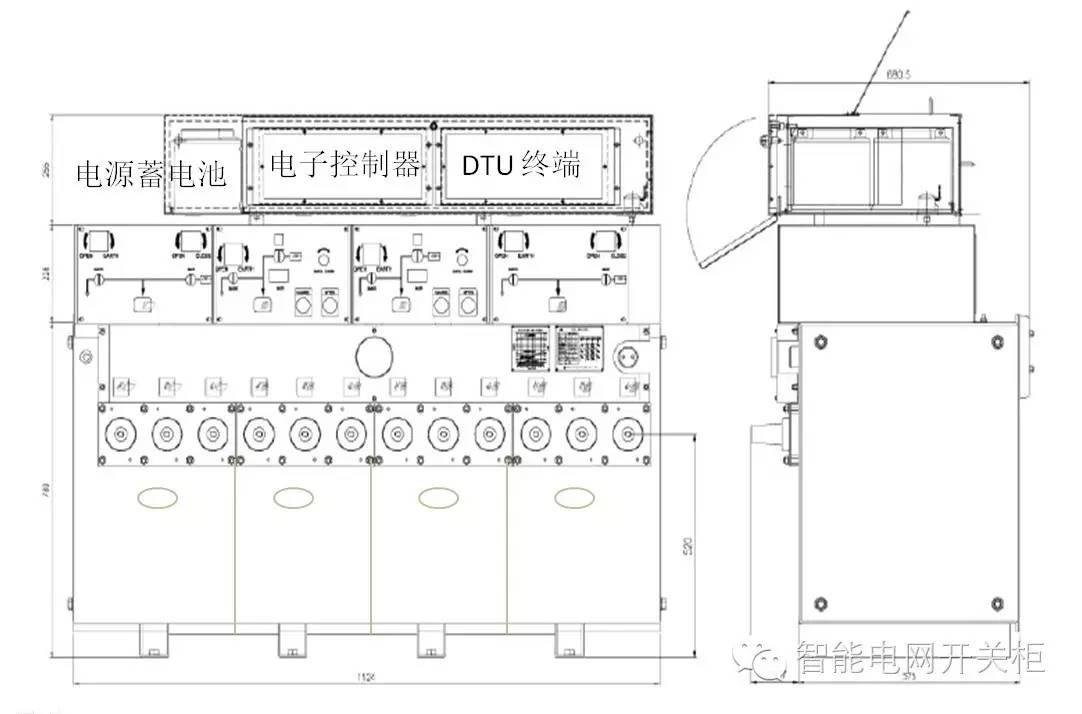
(1) Optimized enclosure structure. Adopted new structural designs and manufacturing techniques such as front-rear doors and elevated roof panels. Resolved equipment installation and maintenance challenges.
(2) Addressed on-site PT voltage transformer power extraction, solving the issue of sustained high-power continuous supply.
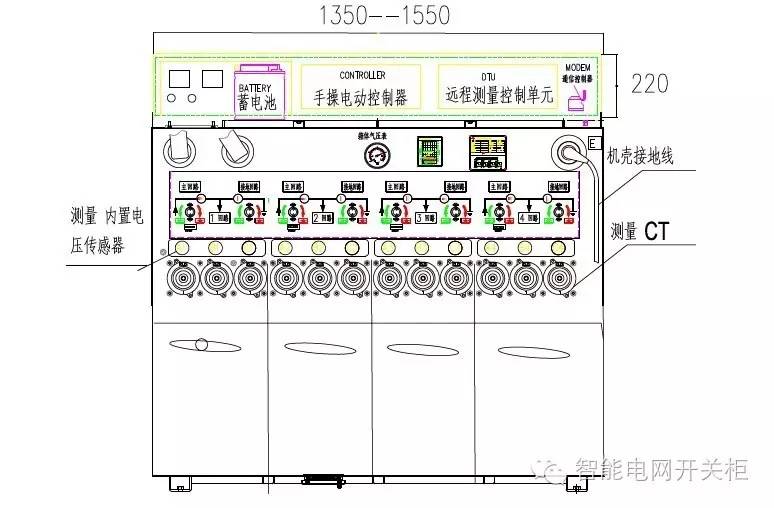
(3) Resolved voltage acquisition challenges. Employed novel capacitive sensor technology for voltage data collection. The intelligent device can determine current direction based on operational voltage power, overcoming the technical difficulty of incomplete power line monitoring information.
(4) Addressed current acquisition issues. Solved technical problems related to power measurement and fault direction determination. Utilized collected current data to calculate power angles, providing substantial foundational data for stable ring network operation.
(5) Resolving installation challenges for smart terminal devices. Traditional on-site assembly faced weather constraints and workspace limitations. Our optimized process shifts 90% of modification work to the backend, pre-configuring all components. This streamlines field installation and significantly enhances equipment quality.
(6) Resolving the installation of electric drive circuits: The mechanical transmission components controlling motor-driven closing and opening operations form the core of intelligent switchgear. Accurate motor drive directly impacts overall switchgear safety. We achieved innovative breakthroughs in electric operating mechanisms, enabling not only the most reliable circuit control but also error-free safety control, thereby enhancing operational safety.
7. Primary Issues with Distribution Network Equipment:
(1) Mismatched interfaces between primary and secondary equipment, resulting in poor compatibility, scalability, and interchangeability;
(2) Disputes over responsibility between primary and secondary equipment manufacturers.
8. Overall Objectives for Primary-Secondary Integration
(1) Achieve full primary-secondary integration for pole-mounted switches in one step;
(2) Resolve combination, device replacement, and factory-based maintenance issues for primary and secondary equipment in ring main units through integration;
(3) Long-term goal: Achieve deep integration of primary and secondary equipment by 2017;
Technical specifications and testing standards for integrated primary-secondary equipment packages shall be provided at each stage.
9. Corresponding specifications for typical designs and bidding technologies have also been issued.
In electrical equipment design, innovations are advancing around existing technologies, products, and solutions—addressing power quality impacts from EV charging, solar, and renewable energy integration, and evolving distribution automation from discrete to motion control automation. With over 70 million interconnected electrical devices and their operational control systems, distribution network informatization will form one of the world's largest industrial cloud platforms. Building these cloud data platforms constitutes the digital solution for new smart electrical equipment.
10. To meet the investment requirements for distribution network construction,
fault indicators must be capable of handling both short-circuit faults and single-phase ground faults.
Fault indicators are a key means for enhancing distribution automation coverage during the 13th Five-Year Plan period. To adapt to distribution network construction demands, these indicators must possess the capability to address both short-circuit faults and single-phase ground faults. Currently, based on different line types, communication methods, and ground detection approaches, fault indicators are categorized into nine distinct types.